Skip to content

PDI Logo

  • About PDI
    • About Us
    • History
    • Vision and Mission
    • People
    • Contact
  • Centers
    • CISS
    • CSPL
    • CSEU
    • KACDC
    • CRCEA
    • CSC
    • CSID
  • Activities
    • Soodang/Woodang Colloquium
    • Woodang Academy
    • Jiam Research Workshop
    • Civic Education
    • Events
    • Pol in Love
  • Publications
    • Journal Article
    • Book
    • Working Paper
  • Journal
    • Peace & Democracy
    • About Peace Studies
    • Editorial Board
    • Archive
    • For Contributors
    • Submission
  • News
    • Notice
    • Upcoming Events
    • Press Release
    • Newsletter
Korean English
KOR ENG
  • About PDI
    • About Us
    • History
    • Vision and Mission
    • People
    • Contact
  • Centers
    • CISS
    • CSPL
    • CSEU
    • KACDC
    • CRCEA
    • CSC
    • CSID
  • Activities
    • Soodang/Woodang Colloquium
    • Woodang Academy
    • Jiam Research Workshop
    • Civic Education
    • Events
    • Pol in Love
  • Publications
    • Journal Article
    • Book
    • Working Paper
  • Journal
    • Peace & Democracy
    • About Peace Studies
    • Editorial Board
    • Archive
    • For Contributors
    • Submission
  • News
    • Notice
    • Upcoming Events
    • Press Release
    • Newsletter

Activities

  • Soodang/Woodang Colloquium
  • Woodang Academy
  • Jiam Research Workshop
  • Civic Education
  • Events
  • Pol in Love

Civic Education

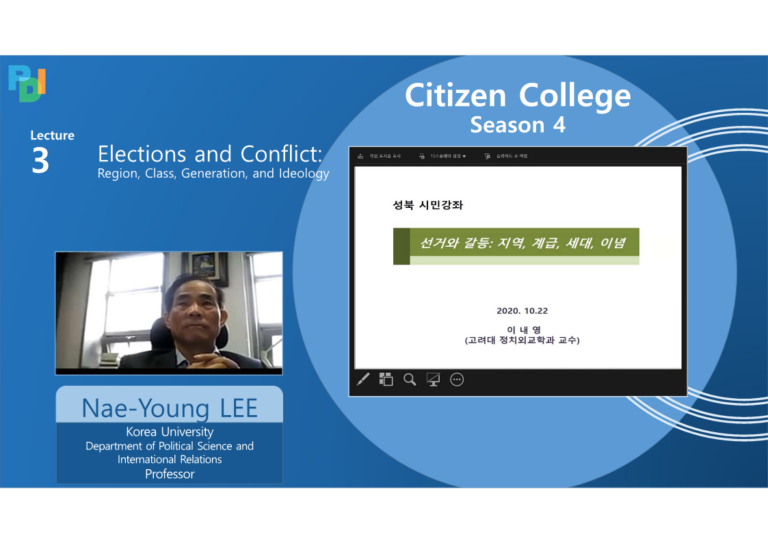
[Citizen College Season 4] #3 Elections and Conflict: Region, Class, Generation, and Ideology

2020.10.22

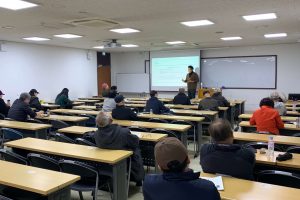
On October 22, 2020, the third lecture of Citizen College Season 4 < Citizen and Participation: How do citizens become owner of politics? > , co-hosted by the Seongbuk-gu Office and the Peace and Democracy Institute, was conducted using ZOOM. The third lecture was given by Professor Nae-Young Lee of department of Political Science and International Relations of Korea University. The lecture titled “Elections and Conflict: Regional, Class, Generation, and Ideology” looked at various social conflicts in Korean society and looked at the impact of conflict on democracy and elections. Conflicts within a democratic society are socialized through political parties and have influenced voters and political party’s behavior in the election process. Through this process which reflects and resolves conflicts in politics, we can see that democracy moves toward a more mature democracy by increasing representation and responsiveness. Looking at the impact of social conflicts on democracy and elections, Professor Lee⋯

[Citizen College Season 4] #2 Elections and Electoral Systems

2020.10.16

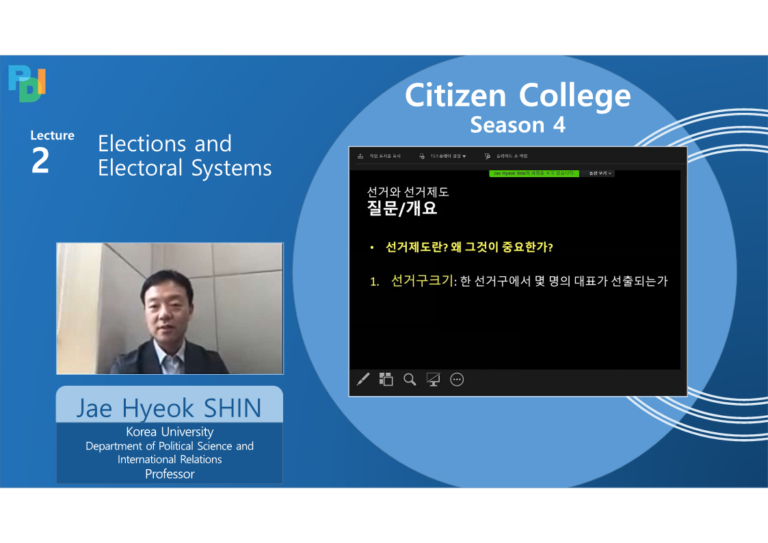
On October 16, 2020, the second lecture of Citizen College Season 4 < Citizen and Participation: How do citizens become owner of politics? > , co-hosted by the Seongbuk-gu Office and the Peace and Democracy Institute, was conducted using ZOOM. The second lecture was given by Professor Jae Hyeok Shin of department of Political Science and International Relations of Korea University. The lecture, titled “Elections and Elections System,” was about looking at the types of election systems and how changes in the electoral system affect the outcome of the election. Changes in the type of electoral system, size of constituencies, and the way seats are allocated have resulted in different allocations of seats, even though they are the same election result. The speaker showed the relationship between the responsibility and coordination of representatives brought about by this change in the electoral system, and further explained the principles of the quasi-linked proportional⋯

[Citizen College Season 4] #1 The Dilemma of Elections and Diplomatic Policy in the Century of COVID 19

2020.10.15

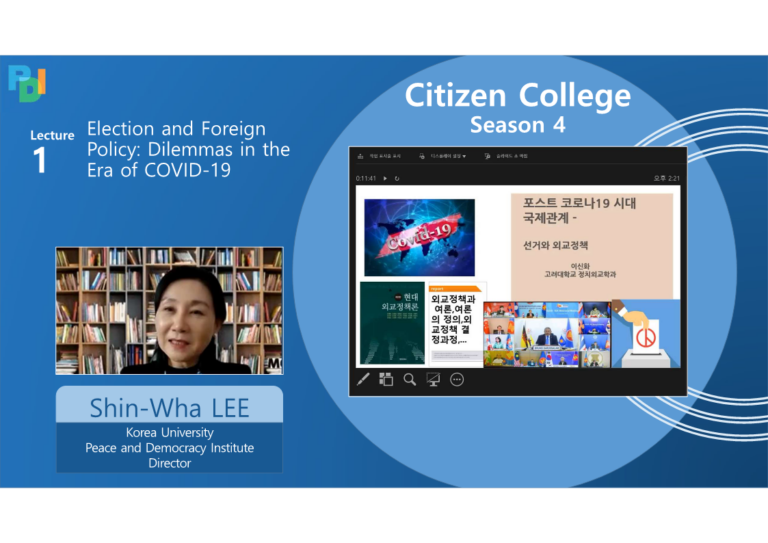
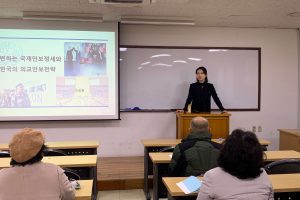
On October 15, 2020, Course of Citizen College Season 4 < Citizen and Participation: How do citizens become owner of politics? > , co-hosted by the Seongbuk-gu Office and the Peace and Democracy Institute, started through online zoom. The first class was held by Shin-wha Lee, a director of Peace and Democracy institute. The lecture, titled “The Dilemma of Elections and Diplomatic Policy in the 19th Century of COVID-19,” looked at examples of major epidemics that changed the course of human history and explained why the complexity and uncertainty in post-Corona international relations would inevitably expand. In other words, discussions were held on how Korea’s diplomatic policy could maximize national interests at a time when the U.S.-China competition for hegemony is expected to intensify. The speaker explained the dynamics of diplomatic policy decisions that could be influenced by domestic election results and public opinion, and the results of past Korean⋯

[Citizen College Season 3] Comparison of Northeast Asian countries’ diplomatic strategic tactics

Kim Doo Jin 2019.12.13

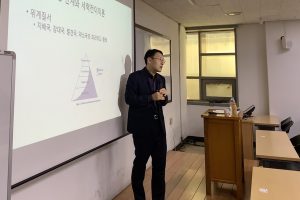
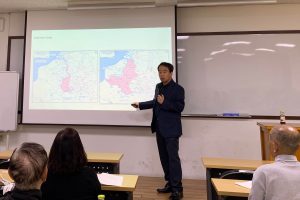
On December 13, 2019, the 12th lecture of the Citizens College Season 3 “Citizens and the World: Peace on the Korean Peninsula and International Politics” was given at Korea University’s Political Science & Economics Bldg. 101. The 12th lecture was given by Kim Doo-jin, a professor at the Institute for Peace and Democracy at Korea University. Under the title of “Comparison of Northeast Asian Nations’ Foreign Policy Strategies,” it was a time to explore the nature and characteristics of diplomacy, and to look at foreign strategic tactics and international relations of East Asian countries. Mutualism is the basis of all diplomacy, and the key is secrecy. Transparency and openness in diplomacy are required, and it is important to inform the public, seek understanding, and pursue diplomacy amid national consensus. Nevertheless, the need for secrecy in diplomacy remains unchanged. Also, it is very dangerous to be obsessed with national sentiment. Therefore,⋯

[Citizen College Season 3] Political Economy of International Finance and Money in Northeast Asia

Lim Gyu Taek 2019.11.29

On November 29, 2019, the 11th lecture of the Citizen College Season 3 “Citizens and the World: Peace on the Korean Peninsula and International Politics” was given at Korea University’s Political Science & Economics Bldg. 101, jointly by Seongbuk-gu Office and the Korea University Institute for Peace and Democracy. The eleventh lecture was given by Lim Kyu-taek, a professor at the Institute for Peace and Democracy at Korea University. Titled “The Political Economy of International Finance and Money in Northeast Asia,” it was a time to explore the international financial system and various financial crises formed in the international community after World War II and take an international political and economic approach to China’s rise. After World War II, the Briton Woods system was formed. A fixed exchange rate system that pegs exchange rates in each country to the U.S. dollar/gold, with limited capital movements and financial markets regulated. Since⋯

[Citizen College Season 3] Paradigm of Solidarity and Cooperation in Northeast Asia

Mo Jun Young 2019.11.29

On November 29, 2019, the 10th lecture of the Citizen College Season 3 “Citizens and the World: Peace on the Korean Peninsula and International Politics” was given at Korea University’s Political Science & Economics Bldg. 101. The 10th lecture was given by Professor Mo Jun-young of Dankook University’s Department of Political Science. Titled “The Paradigm of Solidarity and Cooperation in Northeast Asia,” it was a time to explore the theory of solidarity and cooperation among countries and the reality of European integration, and to discuss whether solidarity and cooperation can be seen in Northeast Asia. A region is an integrated system of two or more geographically adjoining and interacting countries with common racial, linguistic, cultural, social, and historical ties. And this sense of unity can be increased by the infiltration system of external powers. Northeast Asia, which consists of China, Japan and Korea, can be introduced, including the United States⋯

[Citizen College Season 3] The rapidly changing international security situation and Korea’s diplomatic and security strategy

Lee Shin Hwa 2019.11.22

On November 22, 2019, the ninth lecture of the Citizen College Season 3 “Citizens and the World: Peace on the Korean Peninsula and International Politics” was given at Korea University’s  Political Science & Economics Bldg. 101. The ninth lecture was given by Lee Shin-hwa, a political science professor at Korea University. Titled “The Changing International Security Situation and Korea’s Foreign Affairs and National Security Strategy,” the lecture was a time to learn about the expanding concept of security during the post-Cold War and to explore the international relations of Northeast Asian countries. There is still a strong sovereign state in the international community, along with fragmentation (conflict within the country, conflict with politicians, humanitarian crisis) and integration (global governance). Up until the Cold War, traditional wars between countries were mainly fought, but genocide, ethnic conflicts and humanitarian crises, including refugees, were brought to the surface. And 90 percent of the⋯

[Citizen College Season 3] Missile Politics of Northeast Asia

Kim Ji Il 2019.11.15

On November 15, 2019, the eighth lecture of the Citizen College Season 3 “Citizens and the World: Peace on the Korean Peninsula and International Politics” was given at Korea University’s Political Science & Economics Bldg. 101. The eighth lecture was given by Kim Ji-il, a professor at the Institute for Peace and Democracy at Korea University. Under the title of “North East Asia’s Missile Politics,” the lecture was about the meaning and deterrence of missiles in international politics, as well as the missile development process in South Korea and North Korea and the missile capabilities of Northeast Asian countries (China, Russia, Japan). There are cruise missiles and ballistic missiles. Ballistic missiles have short-range missiles (below 1,000 km), medium-range missiles (11,000 km to 5,500 km), and ICBMs (more than 5,500 km) depending on the launch distance. The effects of a missile are ‘destructive’, ‘speed’, ‘stable’ of the system, ‘invasive’, ‘survival’, low-cost, high-efficiency ‘economy’, ‘operationality’ of⋯

[Citizen College Season 3] U.S.-China competition in East Asia and South Korea.

Kim Heon Jun 2019.11.08

On November 8, 2019, the seventh lecture of the Citizen College Season 3 “Citizens and the World: Peace on the Korean Peninsula and International Politics” was given at Korea University’s Political Science & Economics Bldg. 101, jointly conducted by the Seongbuk-gu Office and the Korea University Institute for Peace and Democracy. The seventh lecture was given by Kim Heon-joon, a political science professor at Korea University. Titled “Competition between the U.S. and China in East Asia and Korea,” the lecture looked at the 21st century U.S.-China relationship through the theory of power transfer. It was time to assess Korea’s response to the past and present competition between the U.S. and China, and to discuss which options Korea should choose between the U.S. and China. Traditionally, China ruled Joseon in a flunkeysim.  And as we opened the port, they tried to define the cause of the flunkeyism order as a Western international law⋯

[Citizen College Season 3] The Liquidation of France’s Vichy Regime

Lee Yang Ho 2019.11.01

On November 1, 2019, the sixth lecture of the Citizen College Season 3 “Citizens and the World: Peace on the Korean Peninsula and International Politics” was given at Korea University’s Political Science & Economics Bldg. 101, co-hosted by the Seongbuk-gu Office and the Korea University Institute for Peace and Democracy. The sixth lecture was given by Professor Lee Yang-ho of the Institute for Peace and Democracy at Korea University. This lecture, titled “Liquidation of  France’s Vichy regime,” was about looking at the ups and downs of the French Vichy regime and the nature of the policies it had run, and how Vichy Regime was liquidated after the war. When World War II broke out, German troops took over northern France as they passed through the Arden woodlands. In the south, Vichy was founded with the hero of the Battle of Verdung, Philippe Petain. Germany was able to occupy all of the French⋯

  • 이전
  • 1
  • …
  • 3
  • 4
  • 5
  • 6
  • 7
  • …
  • 9
  • 다음
(02841) PDI, Korea University, 145, Anam-ro, Seongbuk-gu, Seoul, Republic of Korea
  • Tel_ 82-2-3290-1644~5
  • Fax_ 82-2-925-3906
  • Email_ peacestudies@korea.ac.kr
Copyright © 2026 Peace & Democracy Institute all rights reserved.

Sign up for PDI newsletter