Skip to content

PDI Logo

  • About PDI
    • About Us
    • History
    • Vision and Mission
    • People
    • Contact
  • Centers
    • CISS
    • CSPL
    • CSEU
    • KACDC
    • CRCEA
    • CSC
    • CSID
  • Activities
    • Soodang/Woodang Colloquium
    • Woodang Academy
    • Jiam Research Workshop
    • Civic Education
    • Events
    • Pol in Love
  • Publications
    • Journal Article
    • Book
    • Working Paper
  • Journal
    • Peace & Democracy
    • About Peace Studies
    • Editorial Board
    • Archive
    • For Contributors
    • Submission
  • News
    • Notice
    • Upcoming Events
    • Press Release
    • Newsletter
Korean English
KOR ENG
  • About PDI
    • About Us
    • History
    • Vision and Mission
    • People
    • Contact
  • Centers
    • CISS
    • CSPL
    • CSEU
    • KACDC
    • CRCEA
    • CSC
    • CSID
  • Activities
    • Soodang/Woodang Colloquium
    • Woodang Academy
    • Jiam Research Workshop
    • Civic Education
    • Events
    • Pol in Love
  • Publications
    • Journal Article
    • Book
    • Working Paper
  • Journal
    • Peace & Democracy
    • About Peace Studies
    • Editorial Board
    • Archive
    • For Contributors
    • Submission
  • News
    • Notice
    • Upcoming Events
    • Press Release
    • Newsletter

Activities

  • Soodang/Woodang Colloquium
  • Woodang Academy
  • Jiam Research Workshop
  • Civic Education
  • Events
  • Pol in Love

Civic Education

[Citizen College Season 2] Power Inequality and “Gap-Eul” Relationship

Gye-Won Jo 2018.11.02

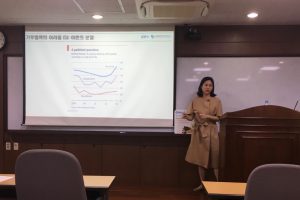
On November 2, 2018, the third lecture of “Citizen College Season 2: Complex conflict and reconciliation of Korean Society” was held by the Seongbuk Village Citizenship Education Center and the Korea University Peace and Democracy Institute (PDI). The third speaker was Professor Gye-Won Jo of the PDI. The subject of the lecture was “Power Inequality and “Gap-Eul” Relationship: An empirical analysis of the “Gapjil” in Korean society”. Professor Jo showed the present condition of “Gapjil” along with the political analysis, and participants discussed the topic. “Gapjil” is a coined word for an individual or a group that are in a socially advantageous position, using their power to treat others unfairly. This happens when they think their status were damaged or when they want to be recognized by others. Unlike the libertarian view that ‘A’ and ‘B’ contract on an equal condition, republican perspective assumes that an unfavourable contract can be⋯

[Citizen College Season 2] Is the Reconciliation of Historical Perception between Korea and Japan Possible?

Park, Hong-Kyu 2018.10.26

On October 26, 2018, the second lecture of “Citizen College Season 2: Complex conflict and reconciliation of Korean Society” was held by the Seongbuk Village Citizenship Education Center and the Korea University Peace and Democracy Institute(PDI). The second speaker was Professor Park, Hong-Kyu, the Director of PDI. In this lecture titled “Is the Reconciliation of Historical Perception between Korea and Japan Possible”, the professor and participants discussed how to approach the issue of Korean-Japanese history and how to break through it. Historical problems in Korea and Japan can be searched by sowing, germination, flowering and fertilization period. Those of them, the flowering period is the thing to focus on, since human rights were emphasized by the result of domestic democratization and post-cold war at that time. Korea was active, Japan was passive, and the gap was widening between the two countries. Of course, in 1998, the ‘Kim-Obuchi Declaration’ agreed on⋯

[Citizen College Season 2] Peace of the Korean Peninsula, the New Future

Soo Hwan Hwang 2018.10.19

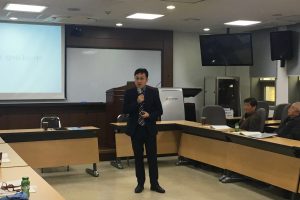
On October 19, 2018, the first lecture of “Citizen College Season 2: Complex conflict and reconciliation of Korean Society” was held by the Seongbuk Village Citizenship Education Center and the Korea University Peace and Democracy Institute(PDI). The first speaker was Professor Hwang, Soo Hwan of Ilmin International Relations Institute. The lecture was titled “Peace of the Korean Peninsula, the New Future”.  The professor and participants discussed the current situation in Northeast Asia, and what attitude should be made about peace. Since President Moon’s speech in Berlin in 2017, the situation on the Korean Peninsula and the situation in Northeast Asia has changed a lot. The South-North Korea Summit and the North Korea-U.S.A. Summit made an opportunity to build a peace regime on the Korean Peninsula. Furthermore, the U.S.A.-China rivalry and conflict in Northeast Asia were more focused on economic issues than the regional initiative issues. With this in mind, regional conflicts⋯

[Citizen College] Local Democracy and Citizen Participation

2018.08.03

On August 3, 2018, the 16th and last lecture of “Citizen College: Citizens Between Life and Knowledge” was held by the Seongbuk Village Citizenship Education Center and the Korea University Peace and Democracy Institute(PDI). The 15th speaker was Professor Gye-Won Jo of PDI. The lecture was titled “Local Democracy and Citizen Participation,” looking at why strengthening the capacity of the citizens, who are the main subjects of city democracy, is important. After reporting the entire program, the certificate was granted to those who participated well.  

[Citizen College] Understanding Southeast Asian Politics

Jae Hyeok Shin 2018.07.27

  On July 27, 2018, the 15th lecture of “Citizen College: Citizens Between Life and Knowledge” was held by Seongbuk Village Citizenship Education Center and the Korea University Peace and Democracy Institute(PDI). The 16th speaker was Professor Jae Hyeok Shin of Korea University. The topic of the lecture was “Understanding Southeast Asian Politics”. From broadly overviewing of Southeast Asia, Professor explained the history and politics of that region. Southeast Asia refers to areas from the Philippines to South Indonesia and inland from Vietnam of Indo-China to west Myanmar. Southeast Asia is made up of 11 countries, of which 10 are ASEAN, with the exception of East Timor. Currently, Southeast Asia has 620 million people, about 1/10 of the world’s population. As a result, the size of the market is very large and ASEAN has become the second trade target of Korea after China. The most important part of Southeast Asian history⋯

[Citizen College] DMZ Field Visit Program

2018.07.24

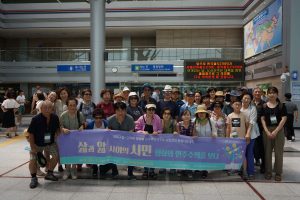
On July 24, 2018, members of “Citizen College: Citizens between Life and Knowledge”, which is organized by Seongbuk Village Citizenship Education Center and the Korea University Peace and Democracy Institute, went Demilitarized Zone(DMZ) spot experience. The course was in the order of Imjingak – steam locomotive – Peace Bell – Dorasan Station – Dora Observatory – 3rd tunnel. The steam locomotive was a train that traveled from Goseong Station to Hanpo Station to carry military supplies at the time of the Korean War. After looking at the steam locomotive, we stood in front of the Peace Bell and prayed for peaceful unification. After the bell was played, everyone touched the bell to feel the vibration. Dorasan Station is the northernmost station of Kyung Eui Line connecting Seoul and Shinuiju. In 2002 when President George W. Bush visited Korea, President Kim Dae Jung and President Bush visited and made speeches. After⋯

[Citizen College] Climate Change and International Cooperation

Sung Eun Kim 2018.07.20

On July 20, 2018, the 14th lecture of “Citizen College: Citizens Between Life and Knowledge” was held by Seongbuk Village Citizenship Education Center and the Korea University Peace and Democracy Institute(PDI). The 14th speaker was Professor Sung Eun Kim of Korea University. The topic of the lecture was “Climate Change and International Cooperation”, which examines the current status and causes of climate change, and why it is difficult to solve the problem internationally to climate change. In a report published by the World Meteorological Organization and the United Nations Environment Program in 2013, scientific evidence has been presented that the warming of the climate system is clear. Representative phenomena of climate change are rising surface temperature, and other extreme weathers and climates. Climate change is caused by fossil fuel-related artificial activities such as greenhouse gases. Therefore, the international community signed the United Nations Framework Convention on Climate Change in Rio in⋯

[Citizen College] Civil War, and Since Then

Jai-Kwan Jung 2018.07.13

On July 13, 2018, the 13th lecture of “Citizen College: Citizens Between Life and Knowledge” was held by Seongbuk Village Citizenship Education Center and the Korea University Peace and Democracy Institute(PDI). The 13th speaker was Professor Jai-Kwan Jung of Korea University. The topic of the lecture was “Civil War, and Since Then”. Professor took a look at the concept of the civil war and its reasons through specific examples. Civilization means the armed struggle between a government and a rebel in a sovereign state. Since the end of the Cold War, most aspects of war have been in the form of civil war. In economic terms, civil war is caused by conflicts in the process of economic development or relative deprivation due to income inequality. On the political side, civil war, on the other hand, is a means to alleviate political discontent accumulated by political discrimination or repression by the state.⋯

[Citizen College] National Assembly Tour

2018.07.10

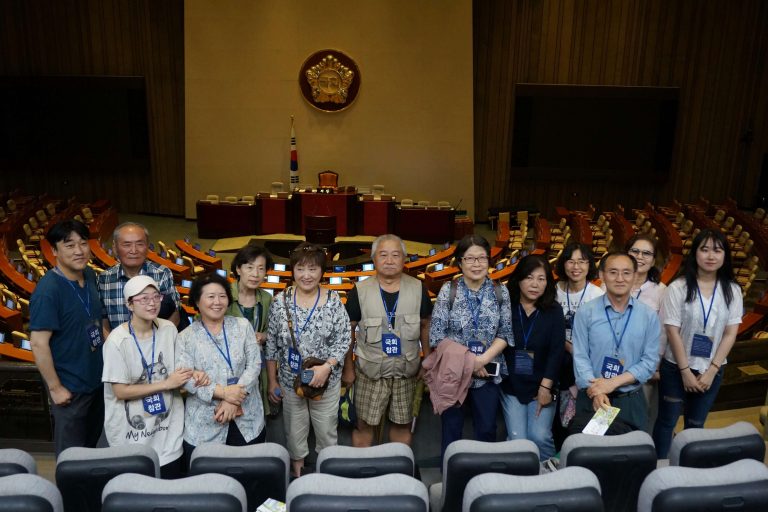
As part of the  Citizen College program, the Peace and Democracy Institute organized a tour of the National Assembly Building and Memorial Hall on July 10 (Tuesday), 2018 from 13:00 to 16:00.

[Citizen College] Future of Europe after the Brexit and Prospects for Korea-EU Relations

Nam-Kook Kim 2018.07.06

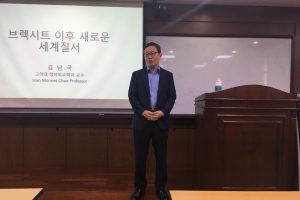
On July 6, 2018, the 12th lecture of “Citizen College: Citizens Between Life and Knowledge” was held by Seongbuk Village Citizenship Education Center and the Korea University Peace and Democracy Institute(PDI). The 12th speaker was Professor Nam-Kook Kim of Korea University. The topic of the lecture was “Future of Europe after the Brexit and Prospects for Korea-EU Relations”. Professor Kim explained the causes of the Brexit and the effects of the Brexit on the world order, Europe, and even Korea. Before talking about the Brexit, He discussed the concepts and origins of EU, Europeanism and Orientalism. The reason why Britain withdrew from the European Union was that there was resistance from the social undermen who had fallen into globalization. Globalization may have brought benefits to Britain, but it has not benefited individuals. Anti-EU sentiments can be seen as a combination of anti-globalization and anti-immigration sentiment. In the UK, Brexit once again highlighted the⋯

  • 이전
  • 1
  • …
  • 5
  • 6
  • 7
  • 8
  • 9
  • 다음
(02841) PDI, Korea University, 145, Anam-ro, Seongbuk-gu, Seoul, Republic of Korea
  • Tel_ 82-2-3290-1644~5
  • Fax_ 82-2-925-3906
  • Email_ peacestudies@korea.ac.kr
Copyright © 2026 Peace & Democracy Institute all rights reserved.

Sign up for PDI newsletter