Skip to content

PDI Logo

  • About PDI
    • About Us
    • History
    • Vision and Mission
    • People
    • Contact
  • Centers
    • CISS
    • CSPL
    • CSEU
    • KACDC
    • CRCEA
    • CSC
    • CSID
  • Activities
    • Soodang/Woodang Colloquium
    • Woodang Academy
    • Jiam Research Workshop
    • Civic Education
    • Events
    • Pol in Love
  • Publications
    • Journal Article
    • Book
    • Working Paper
  • Journal
    • Peace & Democracy
    • About Peace Studies
    • Editorial Board
    • Archive
    • For Contributors
    • Submission
  • News
    • Notice
    • Upcoming Events
    • Press Release
    • Newsletter
Korean English
KOR ENG
  • About PDI
    • About Us
    • History
    • Vision and Mission
    • People
    • Contact
  • Centers
    • CISS
    • CSPL
    • CSEU
    • KACDC
    • CRCEA
    • CSC
    • CSID
  • Activities
    • Soodang/Woodang Colloquium
    • Woodang Academy
    • Jiam Research Workshop
    • Civic Education
    • Events
    • Pol in Love
  • Publications
    • Journal Article
    • Book
    • Working Paper
  • Journal
    • Peace & Democracy
    • About Peace Studies
    • Editorial Board
    • Archive
    • For Contributors
    • Submission
  • News
    • Notice
    • Upcoming Events
    • Press Release
    • Newsletter

Activities

  • Soodang/Woodang Colloquium
  • Woodang Academy
  • Jiam Research Workshop
  • Civic Education
  • Events
  • Pol in Love

Civic Education

[Citizen College Season 8] Lecture5. Nationalism and Immigration policy

2024.05.28

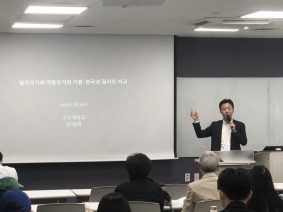
South Korea is one of the countries where nationalist ideology has a strong influence. Nevertheless, empirical data and theories to analyze and understand Korean nationalism are not easy to come by. The equivalence of ethnic and political units is the minimum consensus that defines nationalism in political science, but the debate over it has developed in various forms. There are views that ethnicity is real and views that ethnicity is only a modern concept. Based on the debate on theories of nationalism, this lecture empirically presented the specificity of Korean nationalism. According to Professor Ko, Korea has adhered to an exclusive and closed form of nationalist ideology through the experience of colonization and the Korean War. However, with the experience of democratization and globalization, the exclusivity is showing signs of change, albeit weakly. In particular, the increase in the number of foreigners living in Korea and the overhaul of institutions⋯

[Citizen College Season 8] Lecture4. The Origins of Developing and Plundering Nations – A Comparison of South Korea and the Philippines

2024.05.20

Since World War II, countries like South Korea, Taiwan, Singapore, and the Philippines have experienced different levels of economic development. What is the cause of this difference? Professor Jaehyuk Shin, who gave this lecture, traces the difference between the former and the latter to the difference between developmental and predatory states. According to his lecture, developmental states emerge when state leaders with systemic weaknesses are forced to engage in policy confrontations with political rivals, while predatory states emerge when they are forced to engage in self-serving confrontations. He supported this argument with case studies of Park Jung-hui of South Korea and Ferdinand Marcos of the Philippines. Throughout the lecture, Prof. Jae Hyeok Shin presented the aspect of political competition among elites within a country as an important factor that leads to developmental states, which provides another perspective on why many underdeveloped countries in the world have not been able to⋯

[Citizen College Season 8] Lecture3. Reconciliation Thoughts and Politics

2024.05.13

How does reconciliation relate to politics? While most people agree that reconciliation is necessary for the continuation of political communities, it has not received much attention in the academic and real-politics spheres. Dr. Hak-Jae Kim (PDI, Korea University) provides a comprehensive overview of reconciliation from the perspective of political science, explaining the concept of reconciliation in two main theoretical and practical dimensions. First, at the theoretical level, reconciliation can be defined as ‘rebuilding relationships’. Reconciliation consists of truth-telling, apology and forgiveness, and compensation, and it can be categorized into different levels and approaches. While the concept of reconciliation is largely influenced by the Western Christian perspective, the meaning of reconciliation in the East Asian context is different from the Western concept. On the practical level, reconciliation can be manifested in reality through the reconciliation-oriented actions of politicians. Lincoln of the United States, Mandela of South Africa, and Kim Dae-jung of⋯

[Citizen College Season 8] Lecture2. Understanding the U.S. presidential electoral system

2024.05.09

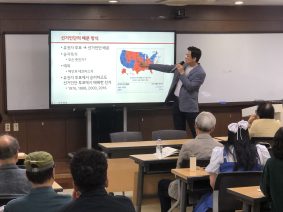
Electoral College, re-election, losing the popular vote… These are the words that come to mind when you think of presidential elections in the United States. These words, which are not found in the Korean electoral system, make the American presidential election system unfamiliar. Professor Woochang Kang, who gave a lecture, emphasized that the American election system does not need to be thought of as complicated and difficult. Based on the historical background of the U.S. electoral system, Prof. Woo Chang Kang explained the qualifications for presidential candidacy stipulated by the U.S. Constitution, The background and purpose of the formation of the Electoral College system, and noteworthy events in the history of American elections. This lecture was an opportunity to expand the view of the U.S. presidential election system from the past to the present by intersecting the past and present. Especially for citizens who are unfamiliar with the U.S. electoral⋯

[Citizen College Season 8] Lecture1. The Future of Democracy in South Korea

2024.04.26

“How will democracy survive?” If democracy basically means the realization of national sovereignty, the two challenges that threaten democracy today come from populism and technocracy. Korea is not immune from these challenges. Through reflection on our experience, we may find the wisdom to overcome the current difficulties. From the 2016-2017 candlelight protests and the impeachment of the president, which raised the profile of Korean democracy, to the 1898 Manmin Communal Assembly, we can look back at events that have advanced democracy throughout the 150 years of Korea’s modern history. In between the 1898 meeting and the 2016-2017 candlelight protests and impeachment of the president, there was the March 1 Independence Movement in 1919, the April Revolution in 1960, the Gwangju Democratization Movement in May 1980, and the June 1987 uprising. While the socioeconomic conditions and the aspirations of the actors are different, one key word that runs through each of⋯

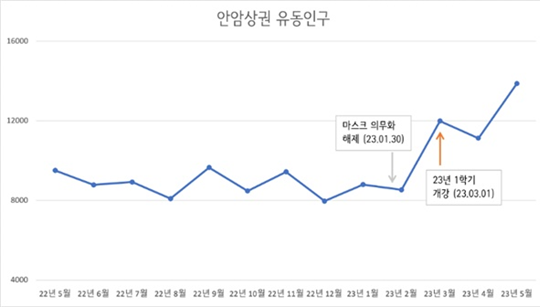
[Media Literacy Education for Prospective Freshman Voters] “The Anam commercial district where ‘COVID-19’ passed… Recovery is ‘yet’ and change is ‘just around the corner’.”

2023.11.30

– It’s the first vacation since the end of Covid-19, but owner-operators are suffering from low sales… Opinions on changes in consumption patterns Around 12 p.m. on the 2nd of last month, around Anam Station in Seongbuk-gu, Seoul, people who came out for lunch began to flock to the Chamsal-gil formed around Anam Station. It was a waiting line that would have been invisible during the semester, but only office workers and a few students remained in the commercial district of the university district during the vacation. It was the first vacation since the end of COVID-19 was declared, but it was difficult to realize the remarkable change. In fact, such quietness is also a characteristic of the university’s commercial district, which has a clear difference in the floating population during vacation and semester. After the mask mandate was lifted, a large crowd gathered again near the school in the⋯

[Citizen College Season 7] #8 The Korean War and Politics in the Movie ‘TaeGukGi: Brotherhood of War’

Yee, Gyu Jeong 2023.06.23

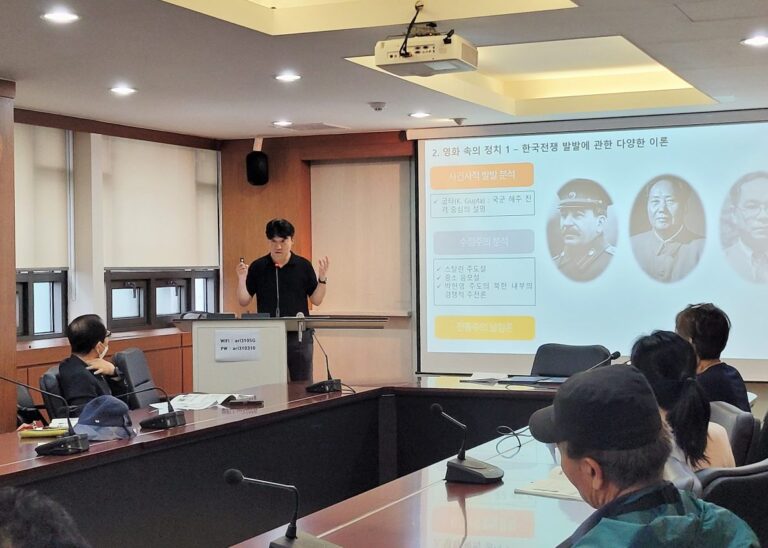
On June 14, 2023, the Seongbuk Adult Education School, PDI, and the Department of Political Science and International Relations at Korea University held the eighth lecture of the Citizen College Season 7  “Politics in Everyday Life” in Asiatic Research Institute, Korea University.  In this lecture Dr. Yee, Gyu Jeong, Senior Researcher at PDI, talked about “The Korean War and Politics in the Movie ‘TaeGukGi: Brotherhood of War’”. The lecture, titled “The Korean War and Politics in the Movie ‘TaeGukGi: Brotherhood of War’”,deals with various theories about the outbreak of the Korean War, the development of the Korean War, the National Guard and the Press Federation, and the current inter-Korean relations and the situation in Northeast Asia. In addition to the traditional South Korean invasion theory, there are K. Gupta’s analysis of the historical outbreak, Stalin-led theory, revisionist analysis such as Sino-Soviet conspiracy theory, and analysis centered on U.S. foreign policy. In this⋯

[Citizen College Season 7] #7 Political and Civil Liberty

Oh Hyang Mi 2023.06.23

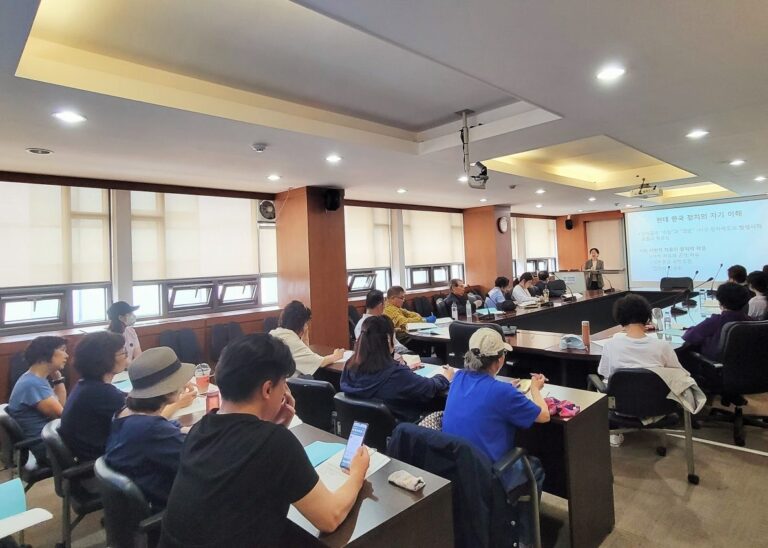
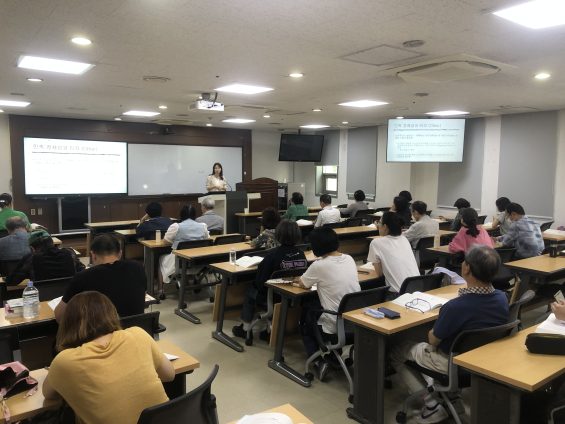
On June 7, 2023, the Seongbuk Adult Education School, PDI, and the Department of Political Science and International Relations at Korea University held the seventh lecture of the Citizen College Season 7  “Politics in Everyday Life” in Asiatic Research Institute, Korea University. In this lecture Dr. Oh Hyang Mi, Senior Researcher at PDI, talked about “Political and Civil Liberty”. Titled “Political and Civil Liberty”, the lecture covered the definition and classification of civil and political freedoms in modern countries, history and examples, and related debates. Civil freedom, such as physical freedom and property rights, is also called passive freedom because it is a freedom guaranteed before basic rights are violated. On the other hand, political freedom such as the right to vote and the right to vote is also called active freedom because it is a freedom guaranteed only when public sovereignty is recognized as public freedom. The guarantee of basic rights necessary⋯

[Citizen College Season 7] #6 Political Participation in Democracy: Understanding of Voting and Demonstration

Hyun-Jin Cha 2023.06.02

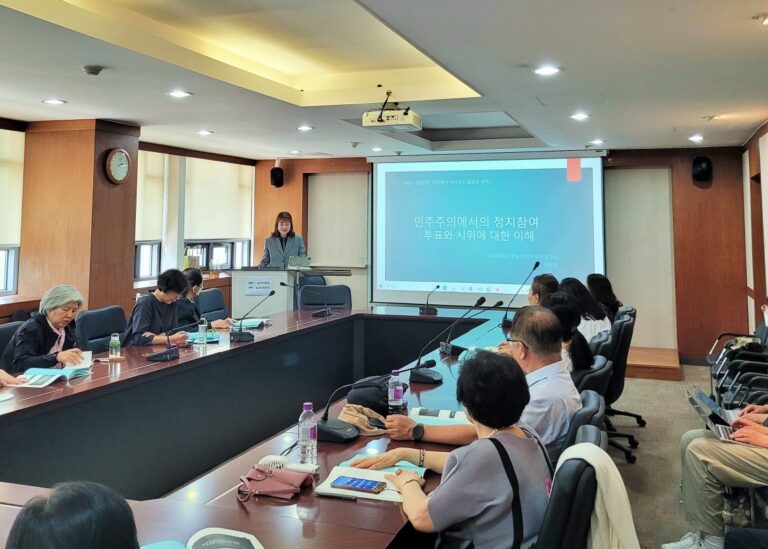
On May 31, 2023, the Seongbuk Adult Education School, PDI, and the Department of Political Science and International Relations at Korea University held the sixth lecture of the Citizen College Season 7  “Politics in Everyday Life” in Asiatic Research Institute, Korea University.  In this lecture Dr. Hyun-Jin Cha, Senior Researcher at PDI, talked about “Political Participation in Democracy: Understanding of Voting and Demonstration”. The lecture, titled “Political Participation in Democracy: Understanding of Voting and Demonstration”, covered various definitions and theories of political participation and influencing citizens’ participation in politics, such as voting and demonstrations. Political participation is defined as the voluntary action of ordinary citizens to solve problems in the political sector. The minimum requirements for defining political participation are behavior, spontaneity, non-professionalism, and politics. From the perspective of analyzing political participation, there are socioeconomic approaches that explain differences in the level of political participation based on education or income level, and⋯

[Citizen College Season 7] #5 Characteristics and Causes Analysis of Democracy in retreat

Kim, Nam Kyu 2023.05.30

On May 25, 2023, the Seongbuk Adult Education School, PDI, and the Department of Political Science and International Relations at Korea University held the fifth lecture of the Citizen College Season 7  “Politics in Everyday Life” in Asiatic Research Institute, Korea University.  In this lecture Professor Kim, Nam Kyu from the Department of Political Science and International Relations at Korea University presented on the topic of “Characteristics and Causes Analysis of Democracy in retreat”. The lecture, titled “Characteristics and Causes Analysis of Democracy in retreat”, deals with the gradual decline of democracy and its causes. The collapse or regression of democracy in the past was caused by military coups, autogolpes, and apparently rigged elections. Today, however, a gradual erosion and regression of democracy without regime change is becoming prevalent. There is a gradual retreat due to the retreat of liberal democracy, the deepening of dictatorship in democracies, and the absence of a single⋯

  • 1
  • 2
  • 3
  • …
  • 9
  • 다음
(02841) PDI, Korea University, 145, Anam-ro, Seongbuk-gu, Seoul, Republic of Korea
  • Tel_ 82-2-3290-1644~5
  • Fax_ 82-2-925-3906
  • Email_ peacestudies@korea.ac.kr
Copyright © 2026 Peace & Democracy Institute all rights reserved.

Sign up for PDI newsletter