Skip to content

PDI Logo

  • About PDI
    • About Us
    • History
    • Vision and Mission
    • People
    • Contact
  • Centers
    • CISS
    • CSPL
    • CSEU
    • KACDC
    • CRCEA
    • CSC
    • CSID
  • Activities
    • Soodang/Woodang Colloquium
    • Woodang Academy
    • Jiam Research Workshop
    • Civic Education
    • Events
    • Pol in Love
  • Publications
    • Journal Article
    • Book
    • Working Paper
  • Journal
    • Peace & Democracy
    • About Peace Studies
    • Editorial Board
    • Archive
    • For Contributors
    • Submission
  • News
    • Notice
    • Upcoming Events
    • Press Release
    • Newsletter
Korean English
KOR ENG
  • About PDI
    • About Us
    • History
    • Vision and Mission
    • People
    • Contact
  • Centers
    • CISS
    • CSPL
    • CSEU
    • KACDC
    • CRCEA
    • CSC
    • CSID
  • Activities
    • Soodang/Woodang Colloquium
    • Woodang Academy
    • Jiam Research Workshop
    • Civic Education
    • Events
    • Pol in Love
  • Publications
    • Journal Article
    • Book
    • Working Paper
  • Journal
    • Peace & Democracy
    • About Peace Studies
    • Editorial Board
    • Archive
    • For Contributors
    • Submission
  • News
    • Notice
    • Upcoming Events
    • Press Release
    • Newsletter

Publications

  • Journal Article
  • Book
  • Working Paper

Book

[Book Chapter] Generation Factor of Voting Choice and Ideological Orientation: Analysis of Presidential Election from 1992 to 2017 (Dec. 2017)

2017.12.26

Author : Jin Seok Bae Book title: Changing Korean Voters 6 Editor : Won-Taek Kang Publisher : East Asia Institute Publication date: Dec. 2017 Abstract: This study is based on the following assumptions: 1) the selection of voting in the 1960s was not relatively progressive in the past, but is still relatively conservative, 2) the 1960s evaluate themselves as progressive, but the voting choice was not as progressive. The study argues that the political characteristics of the 386 generation or 1960s life should be found not in the maintenance of progressivity, but in the change of voting tendency, which is very moderate in width and speed.  

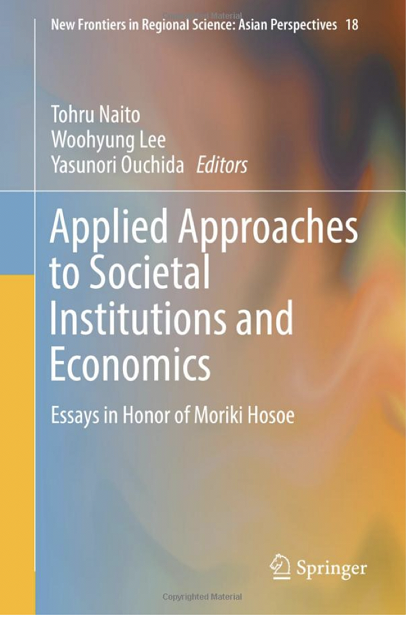
[Book Chapter] Measurement of Ideology Based on Per Capita Vote Versus Money Count Vote in Korea (2017.09)

2017.09.23

Authors : Hang Keun Ryu, Eunju Chi, and Hyeok Yong Kwon Book Title : Applied Approaches to Societal Institutions and Economics Editors : Tohru Naito, Woohyung Lee, Yasunori Ouchida Publisher : Springer Publication Date : September, 2017 Abstract : This paper studies political confrontation developed through ideological differences as well as economic confrontation developed by income inequality. For this, this paper raises the question of whether income difference causes influence on political decisions at the individual level. The per capita vote and money count vote will collide on many political and economic issues if a small number of persons are rich, support a free market system, and encourage fast economic growth and minimum welfare policy in contrast to if a majority of population are poor and support a progressive idea of a more comprehensive welfare policy and higher minimum wage. Ideology histogram of different income groups are tabulated, and the null hypotheses⋯

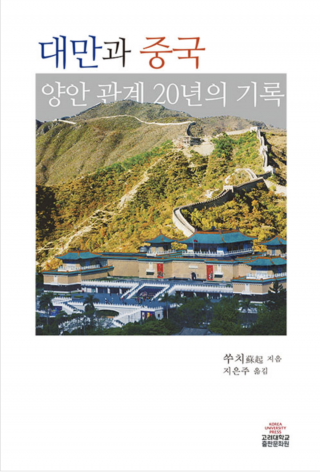
Taiwan and China: 20 Years of Cross-Strait Relationship

Chi Su (Author), Eunju Chi (Translator) (Korea University Press, 2017, in Korean) 2017.06.30

“This book is written by Su Chi(蘇起), a scholar and politician, who is currently chairman of the Taipei Forum. It describes the Cross-Strait relations for about 20 years from January 1988 to May 2008 according to the temporal flow. This book shows how the Taiwanese Republic of China, which has not been recognized for its substantial status in the international community since its withdrawal from the United Nations in 1971, has been looking for survival and prosperity while China, a rival, is booming. In particular, it shows how Taiwan’s independence forces, which have grown since the democratization, responded to strong opposition from China and the United States in the process. Therefore, this book deals with the relationship between China and Taiwan, while at the same time, the United States is an important part of the book. But the protagonist here is Taiwan. It shows how the forces pursuing independence in⋯

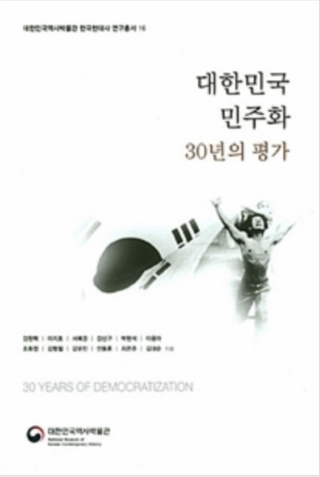
[Book Chapter] Comparative Study on the Implementation and Consolidation of Asian Democracy (2017.06)

2017.06.30

Author: Eunju Chi Book title: Democratization of Korea: Evaluation of 30 Years Coauthor: Won-Taek Kang and others Publisher: Korea National History Museum Publication date: June 2017 Abstract: This paper examines the implementation and consolidation of democracy in the East Asian countries that transformed into the democracy in the third wave of democratization in the 1980s. Starting with the democratization of the Philippines in 1986, Korea, Taiwan, Thailand and Indonesia shifted from authoritarianism to democracy. However, while the democracy of Korea and Taiwan was consolidated in these five cases, the Philippines and Indonesia in Southeast Asia were on the unstable democracies, and the democracy of Thailand was overthrown. This paper explores the causes of these differences through different political systems and economic conditions in each country. As a result, differences in economic conditions rather than political institutions seem to have made a difference in the achievement of democracy. Comparing the economic⋯

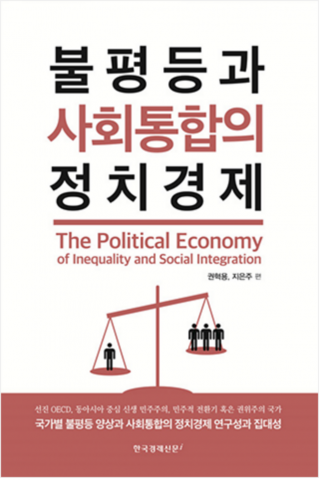
The Political Economy of Inequality and Social Integration

Hyeok Yong Kwon and Eunju Chi eds. (The Korean Economics Daily, 2017, in Korean) 2017.06.30

It is a book by the research group of ‘Political Economy of Inequality and Social Integration’ launched in 2014. Zeroing in on the principle of democracy, the authors note that it is the immediate goal to understand the realities of dissimilarity with democratic principles, which are mitigated by voting behavior. As can be seen from the table of contents, the research results of this book are largely centered on three areas. However, the consistency of the research team, which can be confirmed even when the target is different, is the relationship between economic inequality and political stability. Firstly, attention to the advanced democratic states represented by the OECD countries is an effort to understand the policy responses that have been made to deepening inequality. Secondly, it is a task to understand the inequality of the newly democratic states located in East Asia. Inequality is an important factor in understanding the⋯

Election and the Welfare State

Hyeok Yong Kwon (Korea University Press, 2017, in Korean) 2017.06.30

This book is a collection of research achievements of Professor Hyeok Yong Kwon of the Center for the Study of Inequality and Democracy of Korea University. It consists of three parts: chapter one illustrates research trends in comparative political economics, chapter two focuses on “who, why, when people want welfare state”, and chapter three describes the relationship between election and welfare state. This study generally focuses on the selection of voters as demand side, but it can be confirmed that the author’s theoretical and methodological consistency is prominent. As following the book, readers can understand that where the author’s research interests are, in the intellectual history of political economy. Furthermore, individual study dictates the dynamics of voter preference within the labour market system and macroeconomic changes. Through part two, the author emphasizes that citizens’ welfare state preferences are not fixed, but have been formed, reformed, and changed. What institutional mechanisms are being⋯

The Political Economy of Inequality in Russia

Yangho Rhee (The Korean Economic Daily, 2017, in Korean) 2017.06.30

This book analyzed the political and economic factors affecting redistribution by estimating the extent of Russian inequality, and identifying redistribution as a regulator that lowers market inequality. According to the author, it is important to understand that low growth and inequality have come from political choices, not only from simple economic matters. Determining the minimum wage and determining the degree of redistribution through tax and social spending are political factors. Looking at Russian inequality from a political-economic point of view is linked to the authors’ interest field. The Book consists of the following four parts. First, It analyzed the degree of inequality in Russia. The author explained poverty through the inequality of wealth, not only by income inequality. Second, it explained the process in which the state was captured by social forces as reforms proceeded without a specific roadmap. Third, the possibility was estimated which the inequality of market income⋯

  • 이전
  • 1
  • 2
  • 3
(02841) PDI, Korea University, 145, Anam-ro, Seongbuk-gu, Seoul, Republic of Korea
  • Tel_ 82-2-3290-1644~5
  • Fax_ 82-2-925-3906
  • Email_ peacestudies@korea.ac.kr
Copyright © 2026 Peace & Democracy Institute all rights reserved.

Sign up for PDI newsletter